



How Pallavi Mohadikar’s Palmonas Went From Rs 97 Lakh To Rs 39 Crore In A Single Year
The company's operating revenue surged over 40 times, from ₹97 lakh in FY24 to ₹39 crore in FY25 and the brand turned profitable, reporting a net profit of ₹4.3 crore.

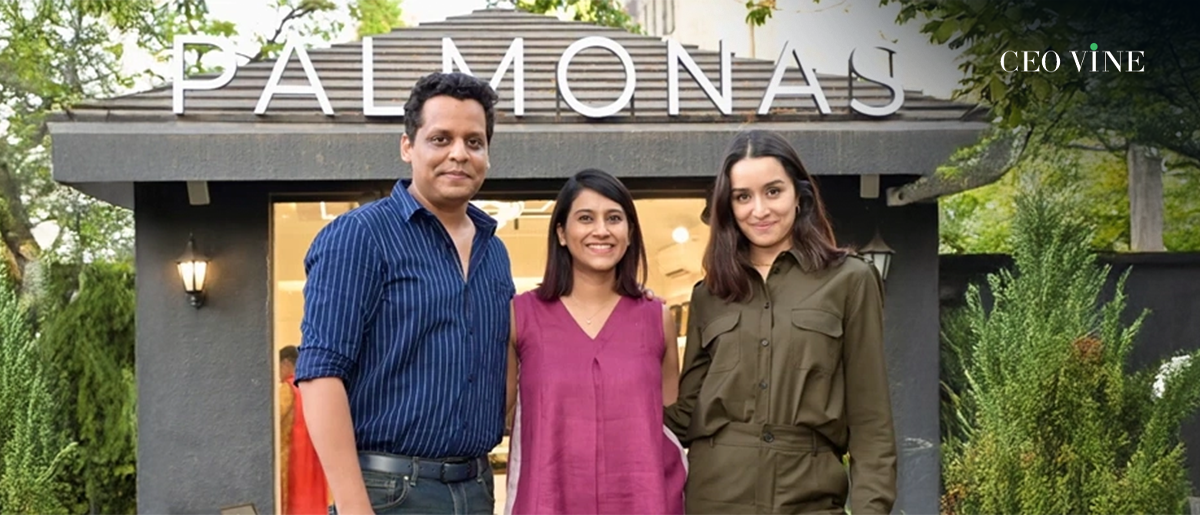
When Pallavi Mohadikar launched Palmonas in 2022 alongside her husband Dr. Amol Patwari, she was entering a jewelry market with two deeply entrenched extremes and almost nothing in between. On one end: fine jewelry in gold and platinum, beautiful but expensive and largely locked away. On the other: imitation pieces in brass and nickel that tarnished within weeks and left skin reactions behind. The space between those two extremes, quality materials at accessible prices, had a name abroad but barely a presence in India.
Palmonas set out to build that middle category. Two and a half years later, the brand has raised a total of approximately $46 million across four rounds, operates 60 profitable stores across India, reported a 40X revenue surge in a single financial year, turned profitable in FY25, and sits at a post-money valuation of approximately ₹1,950 crore following its April 2026 Series B. It is, by most measures, one of the fastest revenue growth stories in India’s D2C jewellery segment.
A Serial Founder Who Saw The Gap Before The Market Did
Pallavi Mohadikar is not a first-time founder. In 2017, she built Karagiri, a digital-first saree brand that grew to become one of India’s recognised ethnic wear D2C brands before being acquired by Mensa Brands in 2021. That exit gave her both the capital and the operational credibility to build again, this time in a category she had been observing closely from the outside.
The founding insight for Palmonas came from an unexpectedly practical place: a conversation at home. Asking her husband Dr. Amol Patwari, an orthopaedic surgeon, how medical instruments remained durable and skin-safe over years of use, she learned that surgical steel was the material responsible. As someone who frequently experienced skin reactions from imitation jewellery but balked at the prices of genuine gold pieces, the connection crystallised immediately. If surgical steel could be safe, strong, and long-lasting enough for a surgical environment, it could be the foundation for jewellery that solved exactly the problem she had been living with.
The two co-founded Palmonas in 2022, building the brand around surgical stainless steel and sterling silver, finished with 2.5-micron gold plating, and later 18K gold vermeil, designed to bridge the gap between fast-fashion accessories and traditional fine jewellery. The category has a name in international markets: demi-fine jewellery. In India, Palmonas was largely pioneering both the concept and the consumer education that went with it.
The Shraddha Kapoor Partnership That Changed Everything
In March 2024, Palmonas made a structural decision that most celebrity partnerships never arrive at. Rather than signing Shraddha Kapoor, one of India’s most-followed celebrities with over 94 million Instagram followers, as a brand ambassador, the founders brought her on as a co-founder with an equity stake.
The distinction mattered more than it might initially appear. As a co-founder rather than an endorser, Shraddha Kapoor’s association with the brand was not a paid promotional arrangement that could be terminated or replaced. It was a genuine ownership stake in the company’s outcome, with her personal reputation tied directly to the brand’s credibility. When she posted about Palmonas, she was talking about her own company, an authenticity that advertising spend cannot replicate and that Palmonas’s founders have credited with driving organic reach worth approximately ₹10 to 20 crore annually in advertising equivalent.
The impact on the business was immediate. Website traffic surged tenfold following the partnership announcement. The brand’s social reach expanded rapidly across the demographic Shraddha Kapoor’s following represents: urban, fashion-conscious women aged 18 to 35, precisely the core Palmonas customer. Prior to her joining, the brand had raised approximately ₹6 crore in an angel round and was building steadily but quietly. After her joining, the pace accelerated sharply.
Shark Tank India Season 4: National Validation
In February 2025, Palmonas appeared on Shark Tank India Season 4, with Pallavi Mohadikar, Dr. Amol Patwari, and Shraddha Kapoor pitching jointly. The founders sought ₹1.26 crore in exchange for 1% equity, valuing the company at ₹126 crore. Namita Thapar and Ritesh Agarwal both invested, validating the ₹126 crore valuation on national television.
The appearance did what Shark Tank appearances do for credible brands: it took a story that had been building organically and placed it in front of an audience of millions overnight. Website traffic rose 300 to 500% during and immediately after the episode aired. Orders came from customers across the country who had not previously encountered the brand but trusted the combination of Shark validation and Shraddha Kapoor’s co-founder status as a credibility signal.
The Shark Tank capital itself, ₹1.26 crore, was modest relative to the round sizes that followed. The more durable value of the appearance was market validation and distribution: Palmonas had demonstrated, in front of the country’s most watched startup pitching format, that its model and margins were strong enough to attract serious investors at a credible valuation.
A 40X Revenue Surge And The First Profitable Year
Palmonas’s financial performance for FY25 represents one of the more striking data points in India’s recent D2C history. The company’s operating revenue surged over 40 times, from ₹97 lakh in FY24 to ₹39 crore in FY25. During the same period, the company turned profitable, reporting a net profit of ₹4.3 crore, an uncommon achievement for a scaling consumer brand in its third year of operations.
The 40X revenue jump reflects a combination of factors: the Shraddha Kapoor partnership driving brand awareness from early 2024, the Shark Tank appearance in February 2025 accelerating customer acquisition, the brand’s offline store expansion moving from negligible to meaningful, and the underlying product quality driving repeat purchase behaviour. The profitability, achieved alongside that scale of growth, reflects a unit economics discipline that the founders have been explicit about prioritising from the outset.
From D2C To 60 Profitable Stores In Under Two Years
Palmonas’s offline expansion has been the most visible dimension of its growth since the Shraddha Kapoor partnership. The brand opened its first physical stores in early 2025, targeting locations in cities and markets where its online data showed the strongest existing customer density. By April 2026, it had scaled to 60 stores, a pace that few consumer brands at any stage manage while simultaneously maintaining profitability.
“With just 60 stores, a significant chunk of our revenue already comes from retail. Over the next 12 months, we intend to scale this even more aggressively. And here’s the part we are most proud of: every store is profitable,” Shraddha Kapoor said in April 2026, commenting on the Series B round.
The brand’s store locations span metro cities and emerging retail markets including Udaipur, reflecting a deliberate strategy of following online demand data into offline locations rather than opening stores speculatively in premium locations. The brand has targeted 100 stores as its near-term offline milestone.
A new 6 lakh square foot warehousing facility supports the combined omnichannel operation, with the brand’s distribution spanning its own D2C website, Amazon India, and the physical retail footprint, alongside international shipping to over 200 countries serving the South Asian diaspora.


The Funding Journey: From ₹6 Crore To $46 Million In Thirty Months
Palmonas’s capital history is a compressed but rapidly scaling arc. An initial angel round of approximately ₹6 crore was raised in 2022 to 2023, funding the brand’s earliest operations and product development. The Shark Tank investment of ₹1.26 crore followed in February 2025, modest in size but significant in validation.
In August 2025, Palmonas closed a ₹55 crore Series A from Vertex Ventures SE Asia and India, bringing institutional capital into the business for the first time and funding the offline expansion, new category development, and operational scaling that drove the brand’s rapid store rollout. Then in April 2026, the brand closed its largest round to date: a $40 million (approximately ₹373 crore) Series B led by Xponentia Capital and Vertex Growth Fund, with continued participation from Vertex Ventures. The round valued Palmonas at approximately ₹1,950 crore post-money, nearly 3.8 times its previous valuation of over ₹500 crore.
Total funding raised across all rounds now stands at approximately $46 million. The three co-founders, Pallavi Mohadikar, Dr. Amol Patwari, and Shraddha Kapoor, retain approximately 65% combined ownership post-Series B. Xponentia Capital holds approximately 10.68% and Vertex Ventures approximately 14.25%.
The Category They Are Building
Palmonas operates in the demi-fine jewellery segment, a category positioned between ₹200 to ₹800 fashion accessories that tarnish within weeks and traditional fine jewellery starting at ₹10,000 or more. The brand’s products, made from surgical stainless steel and sterling silver with 18K gold vermeil finishes, are priced in the ₹800 to ₹5,000 range, with a lifetime warranty that repositions the purchase as a considered investment rather than a disposable accessory. The brand has recently added 9-carat gold pieces to its portfolio, extending into genuine fine jewellery territory from its demi-fine base.
India’s jewellery market, valued at over $80 billion and growing, has historically been dominated by unorganised local jewellers and a small number of large chains. The D2C demi-fine segment sits at the intersection of several converging trends: rising disposable incomes among urban millennials and Gen Z, a shift from gold-as-investment to jewellery-as-self-expression, social media-driven discovery, and a preference for design-led, branded products over commodity pieces. Palmonas’s competitors in the organised segment now include GIVA, BlueStone, CaratLane, and Jewelbox, each building in the space between traditional jewellery and fashion accessories.
You May Also Read: 11 Top Jewelry Brands Redefining Elegance and Ruling the Market
What Comes Next
The $40 million Series B proceeds are earmarked primarily for offline retail expansion, with the brand targeting 100 stores as a near-term milestone before scaling further. International expansion is also on the roadmap, with plans for pop-up stores in major US cities including New York, Los Angeles, and Chicago during 2026, alongside targets in the UK, UAE, Canada, and Southeast Asia, markets with significant South Asian diaspora populations that represent a natural initial customer base for a brand built around Indian design and accessible pricing.
Pallavi Mohadikar remains CEO, with the co-founders’ combined 65% ownership stake giving the founding team significant control over the brand’s strategic direction as it enters its most ambitious growth phase.
Palmonas is headquartered in Pune, Maharashtra. Products are available at palmonas.com, Amazon India, and across 60 physical stores spanning India.