



Meet Karishma Kewalramani: The Founder Redefining Beauty For Every Indian Skin Tone
Founded in 2018 by Karishma Kewalramani Dayal and headquartered in Mumbai, FAE Beauty offers a thoughtfully curated product line.

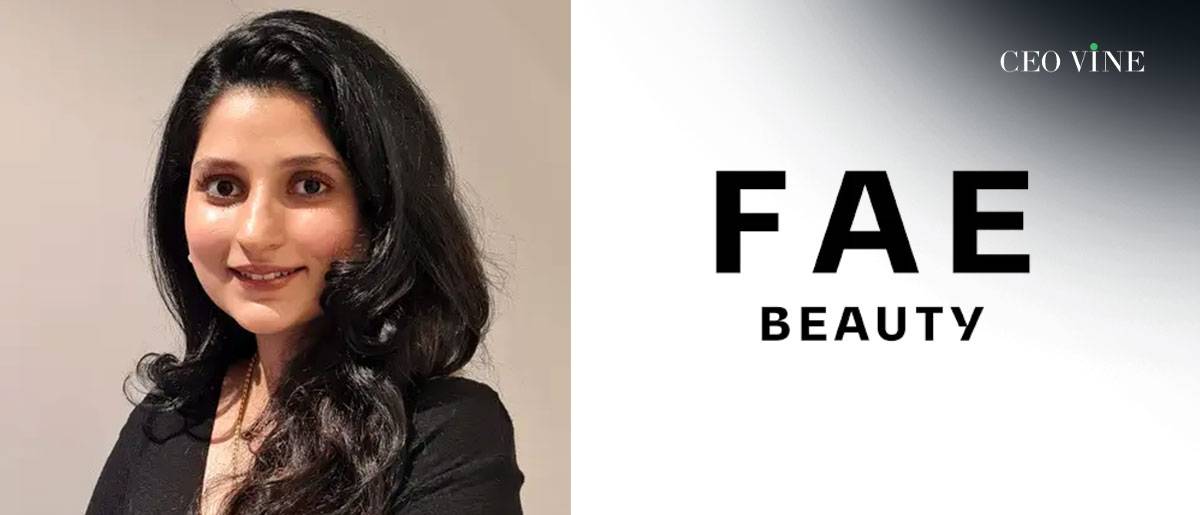
When Karishma Kewalramani stood on the Shark Tank India Season 4 stage in early 2025, she opened with a number the Indian beauty industry had long chosen to overlook: 74% of Indian women fall into the brown, dark brown, or intense brown skin tone category. Yet walk into any cosmetics store in the country and the foundation shades on the shelf are still calibrated primarily for fair skin.
It was not a statistic she had researched for the pitch. It was the lived experience that had pushed her to build FAE Beauty in the first place, and it is the thesis the brand has been building on, quietly and profitably, for six years.
Who Karishma Kewalramani Is
Karishma Kewalramani grew up in Mumbai, where she experienced colorism early and directly. The insidious hierarchy within brown skin itself, which privileges lighter tones over darker ones, shaped her relationship with beauty products from childhood. What she found in those products, shades that did not match, formulas that assumed a different baseline skin tone, was not incidental. It was structural.
After completing her degree in Business Administration at UC Berkeley’s Haas School of Business, she spent close to two years working as a managing consultant at A.T. Kearney in San Francisco, where her work brought her into close contact with the global beauty industry. The exposure sharpened rather than resolved her frustration. She returned to India in 2017, enrolled in makeup school, and spent roughly a year working as a makeup artist on film and television sets, building a ground-level understanding of formulation and product performance before attempting to build a brand.
“I was so fed up with seeing actresses in beauty campaigns appear lighter and brighter than they were,” she has said of that period.
She began building FAE Beauty in early 2018, officially launching the brand in August 2019. The name stands for Free and Equal. The founding premise: high-quality, inclusive makeup designed specifically for the diversity of Indian skin tones, at a price point accessible to a broad base of consumers, without the editing and Photoshop tricks that had become standard in the category.
Building The Brand Without A Playbook
FAE Beauty’s early years were not smooth. Manufacturers in the brand’s earliest days pushed back hard.
“When I went to manufacturers in the initial stages, they would turn back and say: ‘Have you lost your mind? Do you know how much this would cost? Do you know how many MOQs you’ll have to buy?'” Karishma has recalled.
In some meetings, when she brought family members along, manufacturers directed their questions to them rather than her, assuming someone else was making the decisions.
The brand launched with a small range of vegan, paraben-free lipsticks and built from there, guided by what Karishma Kewalramani calls a slow beauty philosophy: launching three to four carefully developed products per year rather than chasing trend cycles.
“We don’t want to bring just another concealer or sell just an eye shadow palette,” she has said. “It needs to be something that works differently and works specifically for people in this country.”
The first buildable matte lipstick line failed to find traction and was eventually discontinued. It was an early, expensive lesson in the gap between founding conviction and product-market fit. What followed was a painful but important reckoning with unit economics and the need for a hero product that could carry the business. That product arrived in the form of Lip Whip, a creamy, bold lip formula that became the brand’s commercial engine and anchor. FAE’s current portfolio spans Lip Whip, Lush Blush, Eye Deal Kajal, skin tints, sunscreens, primers, and face products, each formulated around the intersection of performance and skincare benefits, hydration, pigmentation control, and long-wear finishes, designed specifically for Indian skin tones and undertones.
In late 2025, Karishma Kewalramani also launched FAEGRANCES, a fragrance line, extending the brand beyond its colour cosmetics core into a category she has described as a long-held personal ambition for the brand.
The Shark Tank Moment
FAE Beauty’s highest-visibility moment arrived on Season 4 of Shark Tank India, which aired in early 2025. Karishma Kewalramani pitched for ₹1 crore in exchange for 1% equity, valuing the company at ₹100 crore. The pitch drew competitive interest from multiple sharks. Anupam Mittal offered ₹1.5 crore for 3% equity, a structure that would have meant considerably more dilution than Karishma was prepared to accept.
She negotiated down to a deal she considered defensible for the business’s long-term ownership: ₹1 crore for 1.5% equity from Aman Gupta of boAt and Namita Thapar of Emcure Pharmaceuticals jointly, at an implied valuation of ₹66.67 crore, lower than her original ask but structured in a way Karishma Kewalramani has described as a deliberate trade-off between valuation and dilution.
“Living to fight another day matters more than valuation obsession,” has been how her negotiating stance was characterised in coverage of the episode.
The Shark Tank appearance proved to be a catalyst in two ways. It gave the brand national visibility it had not had access to in its bootstrapped early years, and it appears to have helped bring the larger institutional round together. In November 2025, FAE Beauty raised ₹17 crore in a funding round led by Spring Marketing Capital, with participation from Titan Capital Winners Fund, Arihant Patni, and other angel investors.
“We’re building a brand that reflects how makeup is worn today, confidently, comfortably, and in shades that actually work for our skin tones,” Karishma said of the round.
Total funding raised across FAE Beauty’s history now stands at approximately $3.71 million across nine rounds from 22 investors.


The Numbers Behind The Brand
FAE Beauty’s financial trajectory tells the story of a company that has taken longer than many venture-backed peers to find its footing, but has done so on more sustainable terms.
Revenue for FY25 stood at approximately $2.45 million (roughly ₹20 crore), a meaningful step up from the $868,000 reported for FY24, representing a near-tripling in a single year. The brand has reported having more than doubled year-over-year over each of the past five years, and Krishma Kewalramani has confirmed the company turned profitable in FY25, its first profitable year since founding.
Quick commerce has emerged as a significant growth driver. Within three months of launching on quick commerce platforms, the channel contributed 25% of FAE’s overall revenue, a share the brand has described as strategic rather than accidental, aligning impulse beauty purchase behaviour with the under-30-minute delivery that platforms like Blinkit and Zepto offer. The brand’s products are currently available on its own D2C website, Nykaa, Amazon, Blinkit, Tira, Myntra, and Zepto, with inventory managed across all channels through a Unicommerce dashboard.
The company has 26 employees as of mid-2025, a deliberately lean team for a brand at its revenue scale, and has backed approximately 5% of revenue into ongoing R&D. The brand’s ownership structure reflects its funding history: Arihant Patni holds a 26% stake, Titan Capital holds 13.5%, Shiprocket holds 1.6%, the ESOP pool accounts for 10.3%, and Karishma Kewalramani retains a 38% stake, with the remainder split among family and smaller investors.
What Sets FAE Apart In A Crowded Market
India’s colour cosmetics and beauty market is one of the most competitive consumer categories in the country, with FAE facing an active competitor landscape that includes more than 800 funded and unfunded brands. Pilgrim’s revenue runs at roughly thirty times FAE’s current numbers. Mamaearth, Sugar Cosmetics, and a growing field of D2C entrants all compete for the same urban millennial and Gen Z customer.
FAE’s differentiation has never been purely about price or a single breakthrough ingredient. It has been about formulation philosophy applied consistently across a very specific positioning: makeup that actually works on the full range of Indian skin tones, backed by honest imagery, an inclusive community rather than an aspirational one, and products priced to be accessible rather than premium-gated.
“Every decision that we make is driven by this diversity, from shade range to casting faces for campaigns, even the communication,” Karishma Kewalramani has said. “We’re not restricted by gender, colour, skin tone or type.”
The brand has maintained its no-Photoshop policy across campaign imagery since founding, and has built its community on the explicit premise that representation is not a marketing decision but a formulation and casting one.
“I am actively trying to lower the prices further, because inclusivity also comes from accessibility,” Karishma Kewalramani has said, acknowledging that the brand has not yet cracked drugstore-level pricing at around ₹200 per product, constrained by cost of goods and the premium international packaging that serves as a product differentiator.
What Comes Next
The ₹17 crore raised in November 2025 is earmarked for product innovation, new face-forward categories, and strengthening the omnichannel presence across quick commerce, marketplaces, and offline retail. The brand’s stated near-term ambition is to reach ₹100 crore in revenue, a target that, given the FY25 to FY26 trajectory, appears achievable within two to three years at current growth rates.
FAEGRANCES, the new fragrance line, represents FAE’s most significant category extension to date and opens a new consumer relationship with a category that India’s D2C beauty market has seen rapid growth in. Kewalramani’s expansion plan also includes deeper tier 2 and tier 3 city penetration through regional language outreach and continued investment in quick commerce as the primary discovery and conversion channel for new customers.
“Six years into building FAE,” Karishma Kewalramani wrote in a recent reflection, “I’ve learned that the second audit determines the outcome of the first, not the other way around. Every time we held the line on something that mattered, it compounded over time, even if it meant that we had to be a little more patient with that success.”
For a brand that spent its first several years being told it was in the wrong category, building the wrong product, for a customer the market had decided was not worth designing for, that patience is beginning to pay in numbers.
Editor’s Note: This article was originally published in January 2025. It has been substantially updated in July 2026.