



GenoConnect: How This Kerala Startup Is Bringing DNA Testing Out of the Lab and Into Everyday Life
Your DNA predispositions are like a loaded gun. The trigger is your lifestyle. Whether it fires or not is entirely in your hands.


Most people will never walk into a genetic testing lab unless a doctor tells them to. Digil Vinoy, co-founder of GenoConnect, thinks that is exactly the problem.
“Most diseases have a genetic predisposition,” he says. “If we can actually know the predisposition beforehand, we can take lifestyle modifications and prevent them.”
That idea, simple in principle and technically complex to execute, is the foundation of GenoConnect, a Calicut-based genomics startup building what Digil describes as a technology-enabled platform for everyday genetic testing. Not for patients with a diagnosis. Not for researchers with a university grant. For anyone curious enough to want to know more about who they are, what they are made of, and what their DNA might be quietly predicting about their health.
Two Computer Science Graduates and a Gap in the Indian Market
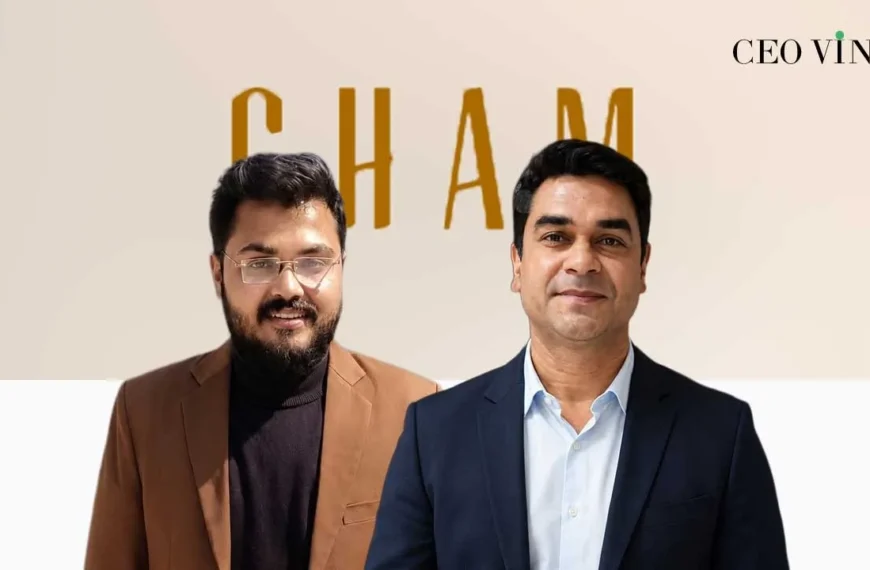
Digil Vinoy and his co-founder Sobin Joseph graduated together from a computer science programme and went separate ways into the IT industry. The idea for GenoConnect had been forming in Digil’s mind for years, closer to twelve by his own account, but the actual founding moment arrived during a career gap, when he stepped away from his previous IT role and asked himself what to build next.
The answer was not immediately obvious. Neither founder came from a biotech or life sciences background. What they had instead was a clear-eyed reading of a market gap and the technical confidence to fill it.
“The science has been built,” Digil explains. “Genome sequencing has been done for many years. The Human Genome Project was a billion-dollar project, and now the cost has driven down significantly. What was prohibiting it was a tech-enabled platform.”
In India, genetic testing existed but almost exclusively in clinical settings. Doctors prescribed tests. Labs ran them. Results came back as PDF reports, often technically dense, and were filed away or forgotten. The consumer-facing model that had taken root in Western countries through companies like 23andMe had no Indian equivalent that met the same standard.
“They will actually simply send you an email with a PDF report,” Digil says of the existing options. “That’s actually not very user-friendly.”
GenoConnect, registered under the Kerala Startup Mission in Calicut, was founded to fix that.
The Technology Decision That Defined Everything
One of GenoConnect’s most consequential early decisions was not about marketing or pricing. It was about sequencing methodology.
Most direct-to-consumer genetic testing companies globally, including the largest ones, use genotyping chips, which are microarrays that test a carefully selected 0.02% of the genome at specific positions identified through statistical research. It is fast, cost-effective, and widely validated.
GenoConnect took a different path.
“We focus on low-pass whole genome sequencing,” Digil says. At 1x coverage, meaning every position of the genome is read approximately once rather than the 30 times used in clinical-grade sequencing, the approach captures the entire genome rather than a pre-selected fragment of it.
The practical implications are significant. Low-pass whole genome sequencing costs more than genotyping but substantially less than full clinical sequencing, placing it within reach of a price-conscious Indian consumer. More importantly, it is what Digil calls future-proof. Because the raw data covers the entire genome, it can be reanalysed as new research emerges, something genotyping data, fixed to its original panel of positions, fundamentally cannot do.
“With genotyping, you cannot reanalyse the same data. It’s actually a fixed thing. But with whole genome sequencing, we are advancing the science much better because of the advantage of reanalysing with better results that may come in the future.”
Mastering this approach for the Indian population, including finding and validating Indian-specific datasets for polygenic score calculation, is what Digil identifies as GenoConnect’s most significant technical milestone to date.
“We are the first in India to do so,” he says.

What GenoConnect Actually Offers
GenoConnect’s product line sits across three levels of sequencing depth.
The entry-level kit, priced at Rs 7,999 plus tax, is based on 1x whole genome sequencing and delivers results covering recent and modern ancestry, haplogroups, Neanderthal and Denisovan ancestry composition, population comparison analysis, and health predisposition reports using polygenic scores. A 5x whole genome sequencing kit is available at Rs 14,999 plus tax, offering greater confidence in health reporting through deeper coverage.
For users wanting research-grade data, GenoConnect offers 15x whole genome sequencing at Rs 29,999 plus tax, and 30x whole genome sequencing, considered the gold standard in genomic research, available on request. A whole exome sequencing option, which focuses on the 2% of the genome that encodes proteins and is most clinically relevant, is offered at Rs 10,499 plus tax, positioned for users working with clinicians and healthcare professionals.
Shipping is free. Sample collection is free. Results are delivered through the platform dashboard.
When early users were asked what they most wanted from the service, the answer surprised Digil.
“People are more interested in the ancestry part,” he says. The health predisposition angle had driven the founding logic, but ancestry, the question of ethnic composition, community origins, and genetic relatedness, turned out to be the category that made users most eager to participate.
The Platform, Not Just the Test
If the sequencing is GenoConnect’s technical differentiation, the platform is its business model.
Digil is explicit about how he wants the company perceived: not as a DNA testing company, but as a social network built on genetic data.
“We see ourselves as a platform where people can share their DNA, find their genetic relatives, or share anything common with the traits that they share.”
Users can compare their results with others, pool kits together within family or community groups to see aggregate genetic traits, and track their own health behaviours against their genetic predispositions over time. The platform includes wearable device integration, currently in development, and a health activity logging feature that allows users to record meals, exercise, and lifestyle habits alongside their genetic data.
Underpinning all of this is gamification. Users earn rewards for sharing results with healthcare professionals, for acting on genetic predispositions, and for participating in the research layer of the platform. Someone identified as predisposed to diabetes who changes their lifestyle accordingly accumulates platform-level recognition for the effort. “Just having static DNA results sitting in your email versus acting upon them and getting rewarded for acting upon them is a total game changer,” Digil says.
The comparison he reaches for is social media. “When social media came, everyone became a content creator. What we aim to accomplish is the same thing but everyone becoming a researcher.”
More than 90% of GenoConnect’s users have consented to use of their data for research, which Digil describes as a finding that surprised even him. The company stores consented samples for potential retesting as technology improves and collects structured metadata including family health history, lifestyle information, and follow-up questions about how results related to users’ lived experience, building what he describes as enriched, consented, future-proof data.
Privacy, Consent and a Long View on Trust
Genetic data is among the most sensitive personal information that exists. Digil does not dismiss the trust question but approaches it with a longer time horizon than many critics of the industry.
“I think it will get normalised,” he says, drawing a comparison to early social media adoption. “People were concerned about their privacy, sharing their photos online. It’s actually just a misconception.” What the body expresses, including height, skin tone, and health conditions, is visible in the world regardless. Genetic data, in his framing, is simply a more precise version of information that already exists.
Another concern people commonly raise is why they should want to know about a disease predisposition and spend years worrying about something that may or may not arrive decades later. Digil’s answer to that is direct. The DNA works in its own way regardless of whether you know about it or not. But knowing about it beforehand means you can manage it proactively, through lifestyle modifications and timely preventive diagnosis, rather than being caught off guard. Genetic health predispositions, as he puts it, are like a loaded gun. The trigger is your lifestyle and your health management choices. Whether it fires or not is entirely in your hands.
All data usage at GenoConnect is consent-based. B2B data sharing agreements are governed by strict MOUs. Technical safeguards are in place against breaches. “Everything is based on the consent of the users. We don’t do any black market trading. Whatever we do, we keep the transparency.”
Where GenoConnect Stands Today
GenoConnect is currently a team of 10 people, bootstrapped, and operating in a pre-scale phase. Growth to date has been organic, with users discovering the platform and referring others, without a formal marketing campaign.
The company is KSUM-recognised and has been featured in Pharma India magazine. Users independently share their results on Reddit and social media, which Digil monitors as a signal of genuine engagement.
He is candid about the company’s current position. The B2B and institutional research partnerships he envisions, with hospitals, wellness centres, nutritionists, and research institutions, have not yet formally begun. The genetic matrimony platform, which he describes as helping compatible individuals find partners based on genetic compatibility to reduce hereditary disease risk in future generations, remains in development.
Fundraising conversations have started. Digil is waiting for additional milestones before formally seeking investment, believing the company needs more demonstrated proof points before entering those conversations from a position of strength.
The Question GenoConnect Is Trying to Answer
Digil’s vision for what GenoConnect could eventually become is broader than any single product. He imagines a future where newborns have their genetic predispositions mapped at birth, where prospective parents can make informed reproductive decisions based on genetic compatibility, and where the personalised health recommendations that currently require expensive clinical consultations are available through AI synthesis of genomic, lifestyle, and family history data, to anyone with a smartphone.
“Genomics doesn’t have to be confined to labs or researchers,” he says. “It’s something that everyone has and is actually working underneath. It actually impacts every aspect of our lives.”
The question of who we are, where we come from, and what our bodies are predisposed to do are questions that genomics is uniquely equipped to answer, and that technology is uniquely equipped to make accessible. GenoConnect is Digil Vinoy’s attempt to build the platform where those answers live.
GenoConnect is headquartered in Calicut, Kerala, and is recognised by the Kerala Startup Mission. The company operates direct-to-consumer across India with free shipping and free sample collection.