



Why WROGN Faces Tough Market Reality in 2025
Virat Kohli-backed WROGN sees FY25 revenue drop to ₹223 Cr, losses rise 32%, highlighting challenges in India’s competitive menswear market.

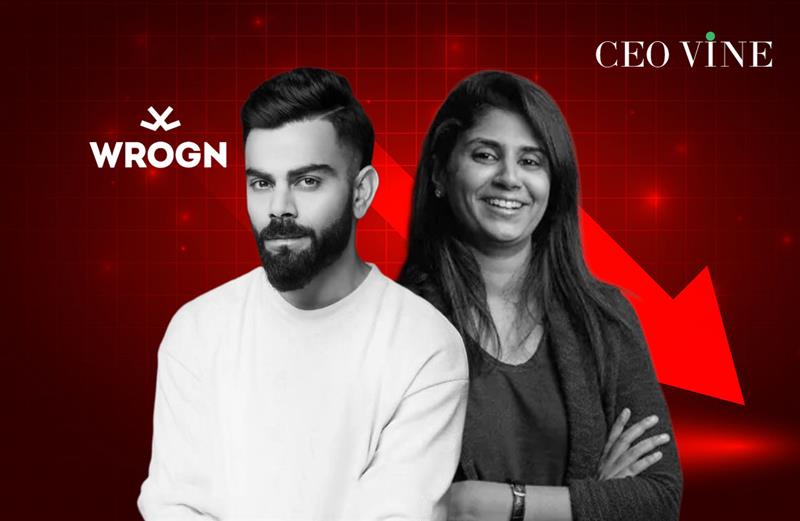
Celebrity endorsements have long been a powerful marketing tool in India’s fashion industry, instantly driving visibility and consumer interest. WROGN, the men’s fashion brand co-created with cricket superstar Virat Kohli, is a prime example of this phenomenon.
Launched in 2014 by sibling duo Vikram and Anjana Reddy, along with Bhavesh Madaan, Ankur Balaji, and Fasil Salahudeen, the brand positioned itself as a youth-centric men’s fashion destination, offering casual wear, footwear, and accessories through both online platforms like Myntra, Flipkart, and Meesho, as well as offline stores.
However, FY25 financial results reveal that even celebrity backing is no guarantee of sustainable success. WROGN’s parent company reported a 9% decline in revenue from operations to INR 223 crore, down from INR 245 crore in FY24. Including INR 9 crore from interest and financial assets, total revenue stood at INR 232 crore, compared to INR 266 crore the previous year. This marks the second consecutive year of declining revenue, following a steep 29% drop in FY24.
What’s Going Wrong for WROGN?
While the brand continues to draw attention through high-profile collaborations, costs have surged significantly, contributing to mounting losses. Material procurement accounted for 40% of total expenditure, amounting to INR 126 crore, while employee benefits rose to INR 39 crore. Marketing and promotional expenses skyrocketed 63% to INR 49.2 crore, reflecting the brand’s aggressive attempt to maintain visibility amid softening demand.
Overall, total expenses ballooned to INR 313 crore in FY25, pushing net losses up by 31.6% to INR 75 crore from INR 57 crore in FY24. As of March 2025, accumulated losses for WROGN reached a staggering INR 709 crore. Key financial ratios also remain under pressure, with ROCE at -70% and EBITDA margin at -27.5%.
Brand’s parent company has raised over $90 million since its inception, including INR 125 crore from TMRW House of Brands, part of the Aditya Birla Group, in June 2024, and an additional $9 million infusion in October. Despite these investments, revenue growth remains elusive.
Factors Marketers Believe Are Behind WROGN’s Struggles:
The larger Indian fashion ecosystem amplifies WROGN’s challenges. The direct-to-consumer (D2C) menswear segment is crowded and fiercely competitive, with brands like Snitch, Rare Rabbit, Bewakoof, and The Pant Project rapidly scaling operations. Unlike WROGN, these online-first labels leverage rapid design cycles, sharper pricing, and robust social media strategies to engage Gen Z and millennial shoppers.
WROGN has largely relied on Virat Kohli’s star power, a strategy that is increasingly insufficient as younger consumers prioritize trendy designs, affordability, and interactive digital engagement. Analysts suggest several reasons behind WROGN’s struggles:
- Slower Product Refresh Cycles – While competitors launch collections frequently to match fast-changing trends, WROGN’s refresh rate lags behind, impacting relevance.
- High Marketing vs. Softening Revenue – Despite a 63% jump in marketing spend, sales have not kept pace, indicating limited ROI from celebrity-backed campaigns alone.
- Rising Operational Costs – Employee benefits and procurement costs continue to eat into margins, contributing to negative ROCE and EBITDA.
- Digital Engagement Gaps – Younger shoppers increasingly rely on social media, influencer collaborations, and interactive campaigns, areas where WROGN has room to innovate.
- Intense Competition from Agile Startups – Online-first brands exploit e-commerce platforms and data-driven campaigns, offering sharper pricing and faster delivery, pressuring established players like WROGN.
Next Read | Startup Shutdowns 2025: What Went Wrong for These Businesses
Evolving Consumer Behavior Puts Pressure on Mass-Premium Fashion
Consumer behavior in India’s mass-premium fashion segment is evolving at breakneck speed. A growing proportion of buyers now seek frequent product refreshes, Instagram-worthy collections, and value-driven purchases rather than relying solely on celebrity endorsements. With India’s fashion industry projected to surpass $100 billion by 2030, the stakes for brands like WROGN are high.
Operationally, WROGN has tried to optimize inventory amid soft demand, slightly reducing stock-in-trade purchases while continuing to invest in talent acquisition, reflected in a 21% rise in employee costs. Despite these measures, accumulated losses indicate that scale and visibility alone do not automatically translate into profitability.
For WROGN, the path forward involves more than celebrity endorsement. The brand may need to accelerate product cycles, adopt sharper pricing strategies, deepen social media engagement, and explore influencer collaborations beyond cricket or mainstream celebrities.