



Why JiviAI Failed? A Medical LLM That Beat Google and OpenAI on Benchmarks Still Could Not Survive
Less than 2 years after launch, JiviAI shut down, a reminder that in AI healthcare, technical excellence and business survival are governed by very different constraints.


JiviAI had, on paper, one of the more technically impressive stories in Indian AI in 2025. Its proprietary medical large language model reportedly topped a respected open leaderboard, outperforming benchmarks from Google and OpenAI on tasks as demanding as the US Medical Licensing Examination and India’s own NEET entrance exam.
Less than 2 years after its full public launch, the company shut down anyway, a reminder that in AI healthcare, technical excellence and business survival are governed by very different constraints.
A Fintech Operator’s Second Bet, This Time on Medical AI
JiviAI, legally Jivi Health Private Limited, was founded in Gurugram by Ankur Jain, who had previously served as Chief Product Officer at BharatPe and before that held product roles at WalmartLabs and Tinder following its acquisition of his earlier venture Humin.
Ankur Jain co-founded JiviAI with G V Sanjay Reddy, chairman of the GVK Group and GVK EMRI foundation, who took on the role of chairman. The startup also drew backing and mentorship from Andrew Ng’s AI Fund, an association that gave the company credibility in a category where trust and technical pedigree matter enormously.
Jivi built its founding team from professionals and research scholars with backgrounds at Stanford, MIT, Harvard, and Yale, alongside physicians and data scientists, betting specifically on proprietary large language models trained for medical use cases rather than simply wrapping an existing general-purpose model.
That bet produced a genuinely notable result. JiviAI built MedX, a medical LLM that reportedly topped the Open Medical LLM Leaderboard hosted by Hugging Face, a widely referenced benchmark in the AI research community, surpassing models including Google’s Med-PaLM 2 and OpenAI’s GPT-4 on tasks such as the USMLE and NEET. The roadmap extended beyond a single model too, with plans for a broader “model cluster” of specialised systems for fields like diabetes and ophthalmology, alongside a multimodal vision model.
The Gap Between a Benchmark Win and a Business
JiviAI raised approximately 2.99 million dollars in total, including an undisclosed seed round in late 2024. For a company building and training proprietary large language models, that is a relatively modest sum. Training and running large AI models is capital-intensive by nature, requiring sustained spending on compute infrastructure that scales with usage rather than tapering off once a product is built, unlike more traditional software businesses where infrastructure costs shrink as a percentage of revenue over time.
According to industry reports, JiviAI’s decision to wind down came amid a combination of pressures: rising AI infrastructure costs that ate into its limited capital, difficulty raising a follow-on round in a tighter funding environment, and unsuccessful acquisition discussions that might otherwise have offered an exit for the technology and team. The company shut down in June 2026, less than two years after its wider public launch, having communicated the closure to employees as it began winding down operations.
The gap between JiviAI’s technical achievement and its business outcome illustrates a pattern seen repeatedly across AI startups in 2025 and 2026. Building a model that wins on a benchmark is a research accomplishment. Converting that model into a healthcare product that hospitals, clinics, insurers, or consumers will pay for at a price that covers the ongoing cost of running it is an entirely separate, much harder commercial problem. It requires regulatory navigation, trust-building with a risk-averse buyer base, and a sales cycle that a startup with under 3 million dollars in funding often cannot afford to wait out.


Ankur Jain’s Reported Return to BharatPe
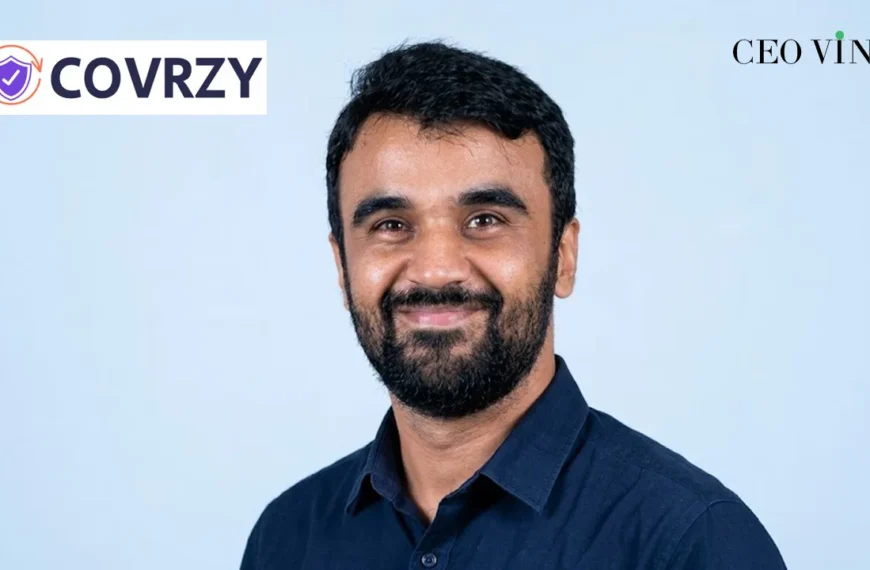
Following JiviAI’s closure, reports suggested Ankur Jain was evaluating his next move, with speculation pointing toward a possible return to BharatPe, the fintech company where he had previously served as Chief Product Officer. The timing coincided with the reported exit of BharatPe’s Group Chief Product Officer and Chief Marketing Officer Rohan Khara, though neither Ankur Jain nor BharatPe had publicly confirmed any formal appointment at the time of JiviAI’s shutdown.
The arc of the JiviAI venture, from a proprietary model beating global AI labs on medical benchmarks to a shutdown less than two years after launch, captures a specific and increasingly common risk in India’s AI healthcare startup scene.
What JiviAI’s Shutdown Reveals
JiviAI’s story highlights the particular bind facing AI startups that choose to build proprietary models rather than thinner application layers on top of existing ones. Building your own model gives a startup more control and, potentially, a genuine technical edge, as JiviAI demonstrated with MedX’s benchmark performance. But it also means carrying the full weight of AI infrastructure costs internally, rather than passing that cost through to a foundation model provider’s API pricing, at a time when compute costs remain a significant and often underestimated line item for any AI-native company.
Healthcare adds a further layer of difficulty. Medical AI products face longer sales cycles, more regulatory scrutiny, and a customer base, whether hospitals, insurers, or health systems, that moves cautiously by design when the product in question makes medical claims. That caution is appropriate given the stakes involved, but it is also punishing for an early-stage startup racing against a shrinking runway. JiviAI needed either a much larger war chest to fund the years of infrastructure spending and sales cycles typical of enterprise healthcare, or an early acquisition that would let a larger, better-capitalised company absorb both the cost and the risk. Neither materialised in time.
The broader pattern across India’s 2026 AI startup shutdowns, JiviAI included, is that raw technical capability, even benchmark-topping technical capability, is proving to be a necessary but insufficient condition for survival. Capital efficiency, distribution strategy, and a realistic read on infrastructure costs are increasingly what separate AI startups that make it to their next funding round from those that do not.