



Why Brands and Manufacturers Should Avoid Fully AI-Generated Product Photography
AI looks good, but trust looks better. Here’s why brands shouldn’t ditch real product photos just yet.

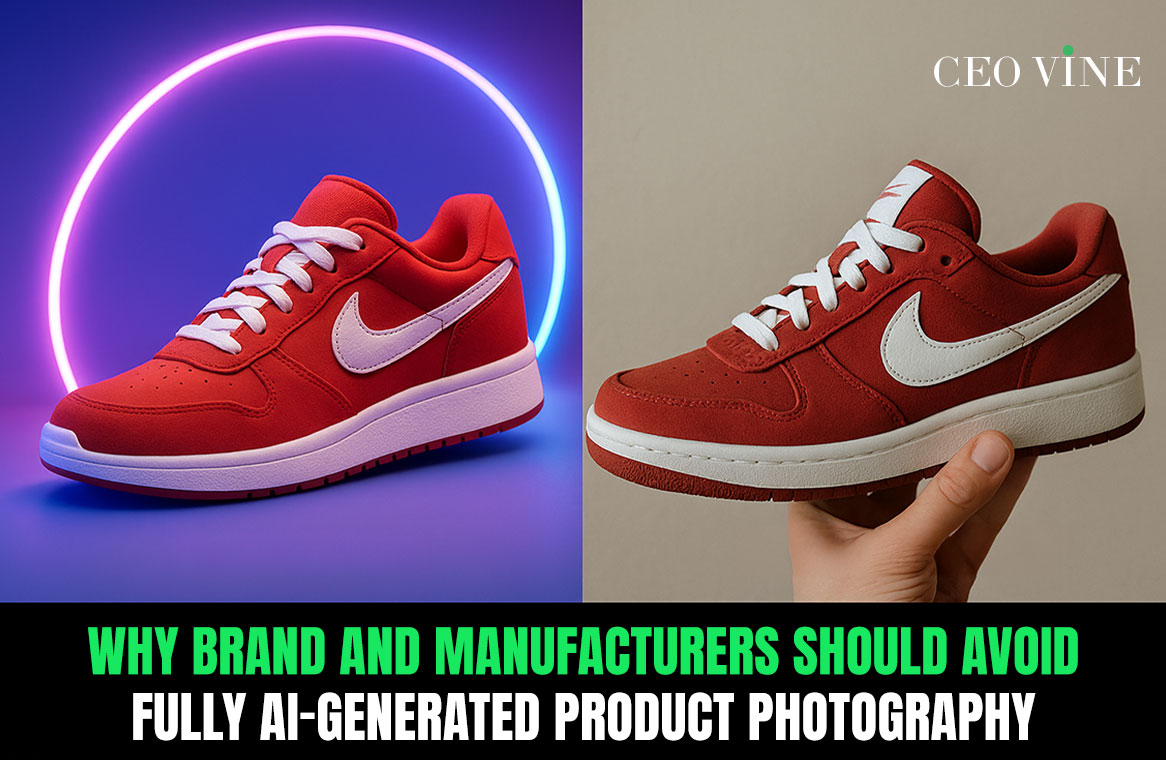
The Rise of AI in Visual Marketing Artificial Intelligence (AI) is transforming industries everywhere, including the way brands and manufacturers approach product photography.
With AI, businesses can generate product visuals quickly, affordably, and in endless variations. While the benefits seem clear—lower costs, faster output, and creative flexibility—there’s a serious risk that often gets ignored: Trust.
When customers can no longer trust what they see, businesses risk long-term losses that outweigh any short-term savings. Fully relying on AI-generated images can seem like a cost-saving strategy, but it could lead to high return rates, poor reviews, and damaged brand reputation.
Why Brands Are Turning to AI for Product Photography
Speed: AI can produce dozens of product images in minutes, eliminating the need for complex studio setups.
Cost Efficiency: No need to hire photographers, models, or rent studio space.
Scalability: Brands can easily adapt images for different markets, seasons, or campaigns.
While these advantages are real, they only address the business side. What about the customer’s side?
The Customer Sees Something Different
Customers today are highly visual. They buy with their eyes before their wallets. If an image oversells a product, the customer’s expectations are instantly set high. When the delivered product falls short of the AI-enhanced promise, disappointment kicks in.
Reality vs. Rendered: AI can enhance a product’s texture, color, and lighting in ways that are impossible to replicate in real life.
The “What I Ordered vs. What I Got” Problem: These moments can go viral and damage your brand reputation beyond repair.
Short-Term Gains, Long-Term Losses
It’s true: you might see improved ad click-through rates or more impressions using hyper-polished AI visuals. But what happens after the sale?
Higher Return Rates: If the product doesn’t match the image, customers return it. Returns are expensive.
Loss of Repeat Customers: Once trust is broken, customers rarely come back.
Bad Reviews and Social Proof: Online reviews are public. One dissatisfied customer can influence hundreds.
The Hidden Costs of Free AI
AI might save on upfront photo production, but the hidden costs are massive:
Loss of Customer Trust: Trust is built slowly and lost instantly.
Reputation Damage: A single misleading image can lead to backlash on social media.
Retail Pushback: Distributors and marketplaces may require realistic, unedited images.
Why Authenticity Wins
Today’s consumers crave authenticity. They’re tired of being sold a dream. They want to feel like they’re making an informed, honest decision.
User-Generated Content (UGC): Real photos from customers build trust faster than polished marketing images.
Behind-the-Scenes Visuals: Showing your process, your factory, or your team adds credibility.
Mixed Content Strategy: Combine AI for backgrounds or layouts, but always keep real images front and center.
Best Practices for Using AI in Product Photography
AI doesn’t have to be the enemy. It’s about how you use it:
Use AI for basic editing, lighting correction, and background removal.
Avoid using AI to completely generate products or scenes.
Always keep at least one real, high-quality photo of the product on every listing.
Be transparent about AI usage when necessary (especially for fashion, food, or beauty products).
Even Big Brands Won’t Go All-AI
AI can generate entire scenes, characters, and even full-length movies today. But despite that, Hollywood still casts real actors like Tom Cruise, Angelina Jolie, Jason Momoa, Shah Rukh Khan, and Amitabh Bachchan. Why? Because people connect with real humans, not perfect digital replicas.
The same goes for music. AI can now generate incredible vocals and compositions, but it still can’t replace the emotional depth of a real singer or a live performance. Connection matters more than perfection.
Big brands understand that it’s not just about how a product looks, but how it feels to the customer. That’s why they continue to invest in real photography, real models, and real experiences.
Hence don’t sacrifice trust for convenience.
AI can be a fantastic tool, but it should support your brand’s authenticity—not replace it. In the rush to save a few bucks, don’t lose sight of the bigger picture: customer trust, long-term loyalty, and brand credibility.
If you’re in this for the next quarter, AI-only visuals might work. But if you’re building a brand for the next decade, authenticity wins every time.