



Taasha Craft: How A Lockdown Hobby In Valsad Became A ₹15 Crore Bangle Brand
Starting from an Instagram page and a wholesale exhibition, the brand posted ₹69 lakh in revenue in FY 2022-23, its first full financial year.


During the 2020 lockdown, a family in Valsad, Gujarat, started making things together. Pillow covers, home décor, outfits, oxidised jewellery, bangles. There was no business plan behind it. It was simply four women who had time, craft supplies, and each other.
By the end of the lockdown, they had accumulated enough inventory to attempt something small. A small retail exhibition. The response surprised them. Strangers were not just looking, they were buying, asking questions, and coming back. It was the first moment anyone in the family seriously thought: this might be a business.
That exhibition turned into Taasha Craft, named after Khushbu’s young daughter who was “loved by everyone at the time,” as the founders recall. Four years later, the brand has crossed ₹3.5 crore in annual revenue, served more than 35,000 orders including over 10,000 customised ones, built a social media community of 700,000, appeared on Shark Tank India, and created livelihood opportunities for more than 200 people, most of them women.
Four Women, Four Roles, One Business They Built From Scratch
Taasha Craft was not founded by entrepreneurs. It was founded by a family: Khushbu Wadiwala (CEO), a BCA graduate whose passion for jewellery design became the creative centre of the brand; Anjali Wadiwala, an M.Tech graduate and former assistant professor who moved from academic life into operations and business building; Anjali Tandel, who completed her MBA in Finance while the business was already growing and took charge of strategy and financial planning; and Antika Tandel, a former homemaker who found her footing in HR and workshop management.
None of them had a background in the jewellery industry. None came with a tested business model or a funding strategy. The roles that define the company today were not assigned on day one. They emerged from doing the work.
“In the beginning, there were no defined roles,” says Khushbu Wadiwala. “Everyone did whatever was needed: designing, replying to customers, social media, packaging and completing orders. The roles developed naturally around individual strengths.”
It is an unusually honest description of how most Indian family businesses actually begin, not with structure but with necessity, and Taasha Craft’s story gains its credibility from how precisely this description matches what the brand has built since.
The Product That Found Its Audience Before The Brand Did
Khushbu Wadiwala’s original frustration was personal. The bangles widely available in the market felt repetitive, sometimes the colour worked but not the design; sometimes the design was right but not the colour, size or occasion. She began experimenting with cotton thread, beads and design ideas drawn from Indian craft traditions: Bandhani, Ajrakh, Patola, Mirror Work, Chikankari, Gota Patti. The result was bangles that looked and felt different from what the market offered.
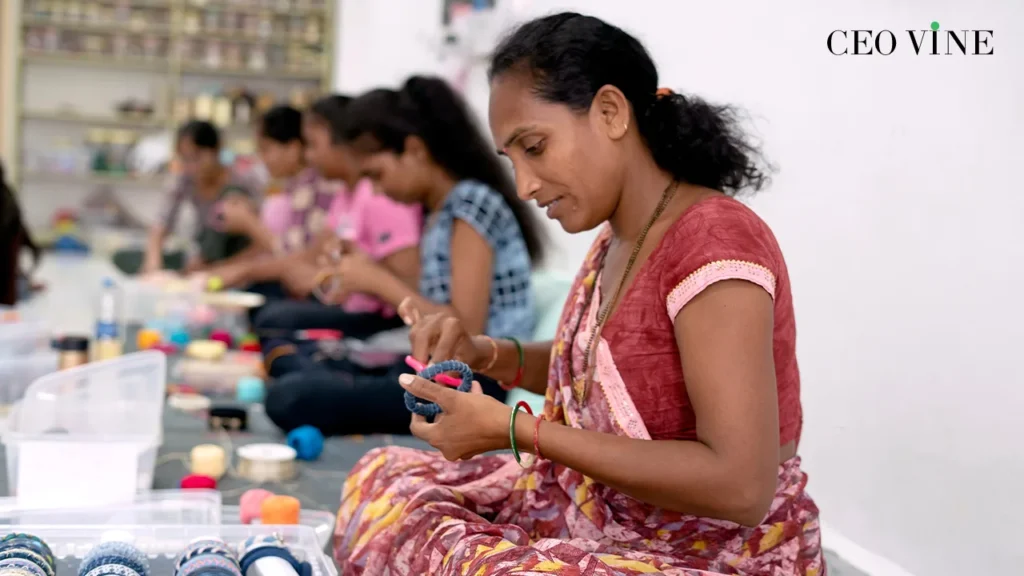
When customers at the first exhibition responded to those designs, it confirmed something the founders had not planned for: there was a gap between what the market was selling and what women actually wanted to wear. Not just a gap in availability but a gap in relevance, in the connection between a bangle and the complete outfit it was meant to accompany.
Taasha Craft’s response to that gap has been the foundation of its growth ever since. Rather than offering customisation as its only solution, the brand invested in building wide, thoughtfully curated fixed collections across colours, occasions, and styling references, so customers could find what they needed directly from the existing range. Customisation became an additional layer for more specific requirements, not a substitute for strong product design.
The 2022 Navratri collection was the moment that changed the brand’s trajectory. It went viral. The team received around 1,000 DMs a day.
“That was when we felt there was something much bigger in the product,” shares Khushbu Wadiwala with CEO VINE .
They committed fully: rented a workshop, hired a team, registered the company, built a website, listed on marketplaces. The hobby had become a business.


The Market Behind The Momentum
India’s jewellery market was valued at approximately $94 billion in 2025, according to Grand View Research, and is projected to reach $153 billion by 2033. Within that vast category, the fashion and costume jewellery segment, the space Taasha Craft operates in, is growing faster than the broader market, at a CAGR of 11.6% from 2025 to 2030, according to Technavio, driven by a specific consumer shift: millennials and Gen Z buyers increasingly want jewellery that is lighter, more design-led, more expressive of individual style, and more closely connected to specific outfits and occasions rather than traditional investment-grade pieces.
Online retail is accelerating this shift. India’s D2C jewellery and fashion accessories channels are projected to grow at 12.3% annually through 2035, as digital-first discovery, social commerce, and direct brand relationships reshape how Indian consumers buy accessories. Personalisation is becoming a genuine differentiator: brands offering customisation report customer lifetime value up to 40% higher than those with purely standardised collections, according to Technavio research.
This is precisely the territory Taasha Craft has been building in since 2020: handcrafted, design-led, occasion-aware bangles at accessible price points, with customisation available for those who want something more specific. The market is moving toward the brand rather than away from it.
A Revenue Journey Built One Year At A Time
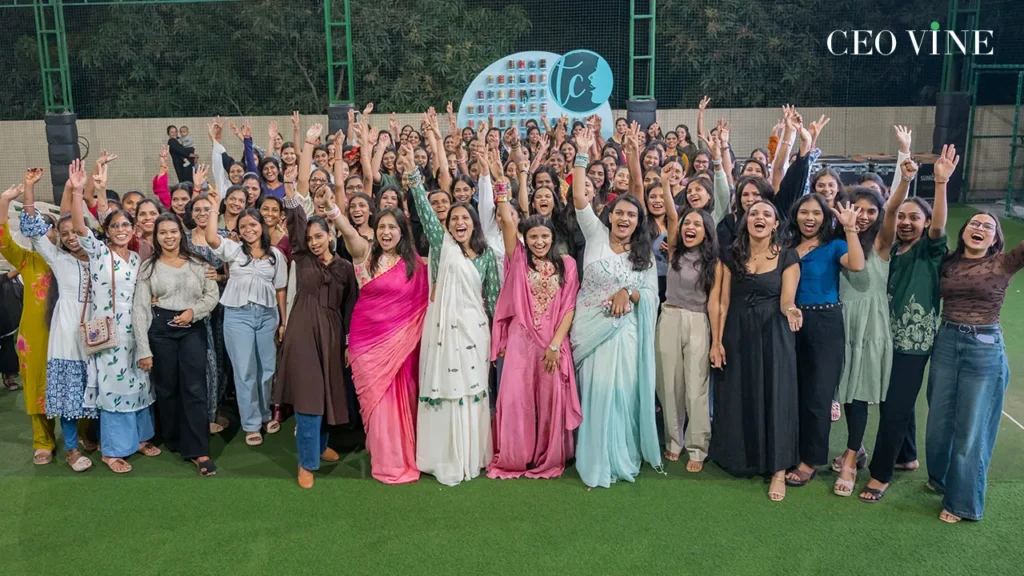
Taasha Craft’s revenue trajectory reflects a business that scaled methodically rather than in a single burst. Starting from an Instagram page and a wholesale exhibition, the brand posted ₹69 lakh in revenue in FY 2022-23, its first full financial year. That grew to ₹1.2 crore in FY 2023-24, ₹2.2 crore in FY 2024-25, and ₹3.5 crore in FY 2025-26: a five-fold increase over four years, achieved without external funding and without compromising profitability.
“The biggest lesson has been consistency,” says Anjali Wadiwala. “We did not start with deep business knowledge, and many times we did not immediately know how to solve a problem. We researched, asked questions, tried to understand it and found a way forward. We learned that you do not need to have every answer before you begin, but you need the consistency to keep learning and moving.”
That consistency shows up in the numbers: 35,000+ total orders served, 10,000+ customised orders completed, a 700,000-strong social media community built primarily through organic content without heavy paid advertising. The brand’s workshop in Valsad, now home to more than 200 people, has become one of the more quietly significant employment stories in Gujarat’s growing D2C fashion ecosystem.
Shark Tank India And What Comes Next
Taasha Craft’s Shark Tank India appearance marked the brand’s first significant moment of national visibility outside its own digital community. The founders pitched a business that had grown from a family lockdown hobby into a profitable, multi-channel handcrafted jewellery company with a clear sense of where it was going. They secured a deal at a valuation of ₹15 crore, a milestone the team has described as strengthening their confidence in the next phase of growth.
The capital is earmarked for the most pressing operational need the brand has right now: expanding beyond its current workshop, which has become too small to handle the volume of orders the brand can attract. Larger production capacity, stronger technology and inventory systems, new product categories, and deeper marketplace and offline presence are the immediate priorities.
International expansion is part of the medium-term roadmap, with the founders identifying Gulf markets and NRI audiences in the UK, US, and Canada as natural target segments for a brand built around Indian craft, weddings, and festive occasions.
India’s jewellery exports reached $7.4 billion in just the April to July 2025 period alone, and the diaspora appetite for design-led Indian handcrafted accessories has never been larger.
Making Bangles Relevant Again
There is a line the Taasha Craft founders return to often when describing what they are building: they want to make people want to wear bangles again. Bangles are not disappearing from Indian culture. But they have, for a generation of younger women, become associated with obligation rather than choice, worn at weddings and festivals because they are expected, not because something about the design itself is exciting.
The most meaningful customer feedback Taasha Craft receives, the founders say, is when someone tells them that seeing the brand’s collections made them want to wear bangles again. Not out of tradition. Out of genuine desire.
That is a harder brief than most fashion brands set themselves. It is not enough to make a good bangle. The brand has to make a bangle that a customer with an entire wardrobe and a complete aesthetic sensibility chooses to pick up and wear because it completes the look she was already building. Doing that consistently, across a 700,000-person community, with a workshop team of 200 people in Valsad, and growing revenue that has more than quintupled in four years, is the real measure of what this family built from a lockdown afternoon of making things together.
Taasha Craft is headquartered in Valsad, Gujarat, India. Products are available on the brand’s website and across major Indian marketplaces.