



Sarvam AI Success Story: India’s Answer to ChatGPT, Built in 30 Months


February 18, 2026. Bharat Mandapam, New Delhi.
Delegations from over 100 countries. Ministers, global CEOs, the biggest names in artificial intelligence. Sam Altman was in the room. Sundar Pichai was in the room.
And then two researchers from Bengaluru walked up on stage and showed what they had quietly built over 30 months — two foundational AI models, trained entirely from scratch, on Indian data, in Indian languages, on Indian soil.
No borrowed technology. No Western model with an Indian label slapped on top. Something genuinely, completely, built here.
That long arc started taking tangible shape at the summit, one of the largest global AI gatherings, which drew delegations from over 100 countries.
Within weeks of that stage moment, Bloomberg reported that Bessemer Venture Partners, Nvidia, and Amazon were in talks to back Sarvam AI in a $300–350 million round at a $1.5 billion valuation.
This is how it happened.
The Problem That Started Everything
Before Sarvam AI, there was a problem that affected 900 million people and almost nobody in the AI world was paying attention to it.
Every AI model processes text by breaking it into units called tokens. In English, one token covers about 0.75 words, clean, fast, affordable. In Hindi, Kannada, or Tamil, it takes 4-8 tokens to represent a single word, compared to just 1.4 for English making AI prohibitively expensive and slow for Indian users.
This is the Token Tax. A silent, structural penalty that every Indian language speaker pays every single time they try to use AI in their mother tongue. Four to eight times more expensive. 4 to 8 times slower. For no reason other than the fact that the people who built these models did not design them with India in mind.
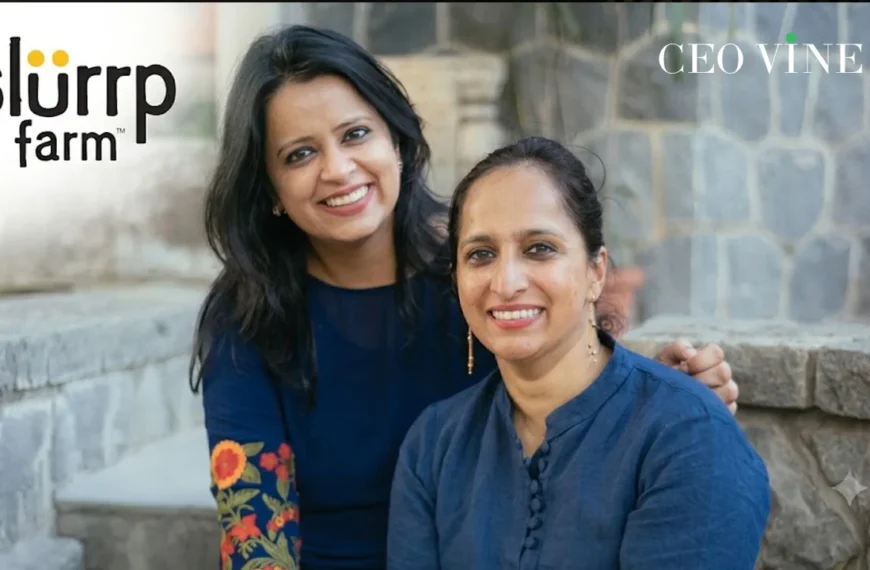
Vivek Raghavan and Pratyush Kumar had watched this problem grow for years. Both had spent careers building technology at population scale. And when ChatGPT arrived and changed everything, they saw not a threat but an opening.
“When ChatGPT came out,” Vivek Raghavan says, “it simply blew my mind. Here was a truly deflationary technology in every sense of the term. Immediately, I could see a way for India to achieve huge breakthroughs in health and education. Here was an opportunity to put a personal tutor in the pocket of every Indian child, and a personal physician in the hands of every Indian adult.”
But it had to be built for India. In Indian languages. At Indian costs. On Indian soil. That realisation became Sarvam AI.
The Founders: Not First-Timers. Veterans.
What makes Sarvam AI different from most AI startups is the depth of experience its two founders brought to the table before they ever wrote a line of code for it.
Vivek Raghavan is not a startup founder who pivoted into AI. He is the man who spent nearly 12 years building Aadhaar, the world’s largest biometric identity system, covering 1.4 billion Indians. He served as Chief Product Manager and Biometric Architect at UIDAI, playing a key role in designing and implementing Aadhaar’s biometric systems.
A graduate of IIT Delhi, Vivek went on to earn a PhD in electrical and computer engineering from Carnegie Mellon University. After Aadhaar, he became AI Evangelist at EkStep Foundation, mentored AI4Bharat, and advised Digital India Bhashini, always focused on one question: how do you build technology that works for every Indian, not just the urban, English-speaking minority?
Pratyush Kumar is the researcher who spent years doing the invisible, unglamorous work that makes great AI possible: building datasets. An alumnus of IIT Bombay with a PhD in computer engineering, his career spans deep research roles at IBM and Microsoft, along with academic stints at IIT Madras where he also served as a faculty member.
Before co-founding Sarvam AI, Kumar co-founded AI4Bharat — an open-source initiative focused on advancing AI for Indian languages. At AI4Bharat, his team built the world’s largest open-source datasets for Indian languages, hundreds of millions of data points from newspapers, government documents, textbooks, and real conversations. The raw material that India’s AI future would need.
Together, they are not a typical founder pairing of one visionary and one operator. They are two builders with complementary depth, one who knew how to scale technology to a billion people, one who knew how to make AI understand them.
Founders Vivek Raghavan and Pratyush Kumar hold over 51% of the company.
August 2023: The Lab Becomes a Company
Sarvam AI was founded in August 2023 by Vivek and Pratyush, who were previously associated with AI4Bharat at the Indian Institute of Technology Madras.
The name “Sarvam” is Sanskrit for “everything”, a deliberate signal. Not a vertical tool. Not a chatbot. Everything. The full stack. India’s complete AI infrastructure, built natively from the ground up.
Their mission, stated simply: “AI for all from India”, building generative AI systems that understood India’s languages, culture, and context rather than relying on models trained primarily on Western data.
They chose a for-profit model, believing that to truly scale AI’s impact across India especially in areas like healthcare and education, significant investment and market competition were needed.
Four months after founding, the market gave its first verdict.
December 2023: The Funding That Announced Sarvam
In December 2023, Sarvam AI announced a combined seed and Series A funding round of approximately $41 million, led by Lightspeed Venture Partners with participation from Peak XV Partners and Khosla Ventures.
At the time, it was the largest funding round ever raised by an Indian AI startup. Lightspeed, Peak XV, and Khosla Ventures are not speculative investors — they are among the most rigorous, research-driven venture firms in the world. Their conviction at this early stage was a signal to the entire ecosystem that Sarvam was building something real.
The funding signalled investor confidence in an India-focused foundational model strategy at a time when most global attention centred on US-based AI firms.
The Technical Decision That Changed Everything
Most companies building AI for Indian languages take the easy route: pick an existing Western model, fine-tune it on some Indian data, and ship it. Faster. Cheaper. Less risky.
Sarvam chose not to do this.
They trained their models entirely from scratch — on Indian data, with Indian-specific tokenisation, designed for Indian languages from the first parameter. It made everything harder. It also made everything better.
The early proof came in October 2024, when Sarvam released Sarvam-1, a 2-billion parameter model. Despite its small size, it outperformed several bigger Western models on tests involving Indian languages, general knowledge, and simple reasoning. It was also four to six times faster to run.
That result proved the thesis: when you build AI on the right data for the right context, you do not need to be the biggest to be the best.
April 2025: The Government Chose Sarvam
In April 2025, something unprecedented happened in Indian AI.
The Ministry of Electronics and Information Technology selected Sarvam AI to develop an indigenous foundational model under the IndiaAI Mission — and as part of the initiative, the company received access to government-supported computing infrastructure including GPUs allocated for model training.
The numbers behind this selection tell the real story. Sarvam AI received a record allocation of 4,096 Nvidia H100 SXM GPUs via Yotta Data Services, receiving nearly ₹99 crore, approximately $11 million in subsidies. This was the largest single allocation the IndiaAI Mission had made.
And crucially: the IndiaAI compute portal prices GPU access at ₹65 per hour, against a global market rate of ₹210–250. That discount, compounded across a full training run, shows up in the model — not in the announcement. In the model.
India had chosen its national AI champion. And it had given that champion a running start that no amount of private funding alone could have bought.
February 2026: 14 Days That Changed the Conversation
In the two weeks leading up to the India AI Impact Summit, Sarvam ran what became known as their “14 days, 14 launches” — a burst of product releases that showed the world exactly what 30 months of focused building looked like.
Sarvam Vision beat Gemini 3 Pro and ChatGPT on Indian-language document OCR — scoring 84.3% on olmOCR-Bench, surpassing Gemini 3 Pro’s 80.2% and ChatGPT’s 69.8%. An Indian startup had outperformed Google’s flagship model on a real-world task.
Bulbul V3 delivered more than 35 natural-sounding voices across 11 Indian languages, expanding to 22. It handles mixed languages, numbers, and emotional tone so well that listeners in blind tests preferred it over global rivals.
Saaras V3 brought automatic speech recognition to 22 Indian languages, designed to work on low-bandwidth connections and basic devices.
And then, on the summit stage itself: Sarvam-30B and Sarvam-105B — two foundational models trained from scratch, released as open source under the Apache License 2.0, available to any developer in the world for free.
The Sarvam-105B model activates approximately 9 billion parameters per token, supports a 128,000-token context window, and is positioned for complex reasoning and enterprise applications.
Both models were released openly. Any developer anywhere could download them, use them, build on them. That decision — to open-source their most powerful work — is central to everything Sarvam believes about how AI should reach India.

The Products: A Complete Indian AI Stack
What Sarvam has built is not one product. It is an ecosystem — every layer of AI infrastructure that India needs, built natively.
Indus, the consumer-facing app, launched as a voice-first AI interface supporting Indian languages. Think of it as India’s ChatGPT, designed for the way Indians actually communicate — switching between languages mid-sentence, using regional references, speaking rather than typing.
Sarvam Studio, a platform for creators and businesses to make content multilingual, translating and dubbing across Indian languages at scale.
Chanakya, announced in March 2026 after over a year of quiet development. An applied AI platform for environments where failure is not an option: defence organisations, regulated financial institutions, government departments that cannot route sensitive data through public cloud infrastructure in California. Air-gapped, on-premise deployments. Multi-modal data ingestion. Production-grade agentic workflows.
Sarvam Kaze, an indigenous AI-powered wearable glass that listens, understands, and captures what users see in real time, supporting more than 10 Indian languages. Launching May 2026. India’s first AI hardware product. Wearable intelligence, in your language, designed for your context.
The Sarvam Startup Program, launched March 2026, completes the picture providing early-stage companies with 6–12 months of API credits, priority engineering support, and access to production infrastructure for building multilingual AI applications. An Indian AI company now nurturing the next generation of Indian AI builders.
The Partnerships: The Ecosystem Is Betting on Sarvam
The product launches opened doors that funding alone cannot.
In February 2024, Microsoft partnered with Sarvam AI to develop voice-based generative AI tools — announced during Microsoft CEO Satya Nadella’s visit to India.
UIDAI, the same body Vivek helped build Aadhaar for announced a collaboration with Sarvam AI to integrate AI-based voice interactions and multilingual support into Aadhaar-related services. The man who built Aadhaar’s biometric architecture is now building the AI voice layer that sits on top of it.
Sarvam partnered with SBI Life Insurance to deploy multilingual generative AI for enhanced customer engagement, and with Tata Capital for scaling its multilingual voice AI.
And then came the news that signalled Sarvam had genuinely arrived on the global stage. Bessemer Venture Partners is expected to lead a $300–350 million round, with Nvidia, Amazon, and Prosperity7 Ventures also participating, at a valuation of $1.5–1.55 billion.
From $41 million raised in December 2023 to a $1.5 billion valuation in April 2026, without a single additional funding round in between. That is what 30 months of building the right thing can do.
The Vision: Sovereignty Is the Long Game
Vivek Raghavan is direct about why this matters beyond business. “Sovereignty is important in the long run. It’s not about what we build today, tomorrow, or even 10 years from now. You have to look at the long arc.” Without domestic AI capability, India risks becoming merely a consumer in a future shaped elsewhere, a new form of technological colonisation.
India has 22 constitutionally recognised languages. 1.4 billion people. The world’s youngest population. And for decades, every major technology platform serving India was built somewhere else, optimised for someone else’s language and culture.
AI is the most powerful technology the world has ever built. Sarvam’s bet is that India does not have to receive it passively — it can build it.
In a 2025 pilot, Sarvam’s voice-AI technology touched 45 million people across 28 states in just 10 days, primarily in Tier-2 and Tier-3 locations.
Forty-five million people. Ten days. In their own languages.
That is not a product demo. That is a country beginning to meet itself in technology, perhaps for the first time.
And when Pratyush Kumar was asked about competing with OpenAI, Google, and Anthropic simultaneously while building from a Bengaluru office with 114 people, he had a simple answer:
“We’ve reached an inflection point. We’ve trained a model that is competitive.”
And Vivek Raghavan, on the ambition that drives all of it:
“If we are not ambitious, we will only build small things.”
Thirty months. Two founders. One mission. India’s own AI — built from scratch, in Sanskrit’s word for everything.