



Rage Coffee Success Story: From 5 SKUs To Rs 100 Crore In Sales
Rage Coffee has raised approximately $11.4 million across six funding rounds from 39 investors, including Sixth Sense Ventures, Virat Kohli, and GRM Overseas.


When Bharat Sethi started Rage Coffee in 2018, the instant coffee shelf in India was effectively a two-brand contest that had not changed in decades. Nescafe and Bru controlled the category, and neither had much reason to innovate against the other. Bharat Sethi, already a second-time founder by then, looked at that shelf and saw an opening that the incumbents had no incentive to notice: a generation of younger, more health-conscious Indian consumers who wanted their coffee to do more than wake them up, and who had no real options that spoke to them directly.
Seven years later, Rage Coffee has crossed ₹100 crore in cumulative sales, drawn investment from one of India’s most recognisable cricketers, and convinced a publicly listed basmati rice exporter to take the single largest stake in the company. It is, on most counts, an unusual path for a coffee brand. It is also, in its specifics, a fairly precise map of how a founder who had already built and exited one D2C company applied those lessons to a much harder, much more commoditised category the second time around.
A Second-Time Founder Who Had Already Made His Mistakes Once
Bharat Sethi’s path to Rage Coffee did not begin with coffee. Around 2011 and 2012, he built PosterGully, one of India’s earliest large-scale D2C ventures, selling posters and wall art directly to consumers at a time when the term D2C barely existed in the Indian startup vocabulary. PosterGully was eventually acquired, an exit Bharat Sethi has described as roughly three and a half times the business’s annualised revenue, a deal he has said he stuck with despite reservations about the structure, because the alternative was walking away from the table entirely.
The venture Bharat Sethi built immediately after that exit, by his own account, was one of the bigger mistakes of his career, a lesson he has referenced often without going into great public detail, but one that appears to have sharpened his instincts considerably by the time Rage Coffee came together. Born in Delhi, Bharat Sethi entered his third venture with a working knowledge of D2C economics, brand building, and operational pitfalls that most first-time founders take years to acquire, and he applied that knowledge to a category most investors at the time considered unwinnable: instant coffee, a space dominated by FMCG giants with decades of distribution infrastructure and brand recall that a startup had no obvious way of matching head-on.
The Business Model
Rage Coffee’s core product differentiation was built around a simple repositioning of what instant coffee could be. Rather than competing on taste or price alone against Nescafe and Bru, Rage built its range around vegan-friendly, vitamin-infused instant coffee, in flavours and formats designed to appeal to a more health-conscious, ingredient-aware customer than the instant coffee category had traditionally served. The product range has since expanded considerably, spanning freeze-dried, spray-dried, and agglomerated instant coffee, whole beans, ground coffee, and ready-to-drink beverages, alongside an entry into caffeine bars and cookies, extending the brand’s functional positioning into snacking.
What distinguishes Rage’s business model most clearly from a typical single-channel D2C brand is the deliberateness of its omnichannel approach from a relatively early stage. The company built its distribution across its own D2C platform, leading e-commerce and quick commerce marketplaces, more than 1,000 HoReCa, hotel, restaurant, and cafe, partnerships, and over 5,000 general trade and modern retail touchpoints. That spread across channels, rather than a singular bet on direct-to-consumer e-commerce, the model most Indian D2C brands of Rage’s era leaned on almost exclusively, has functioned as a structural hedge: when one channel’s growth slows, the others continue carrying volume.
Manufacturing has been brought in-house as a deliberate strategic choice. In July 2023, Rage Coffee inaugurated a 30,000 square foot production facility in IMT Manesar, Haryana, giving the company direct control over its blending processes and packaging, including what the company describes as a patented packaging format, rather than relying on third-party contract manufacturing as most challenger FMCG brands at a similar stage typically do.
Funding
Rage Coffee’s capital history reflects a steady broadening of who believed in the bet, moving from venture capital toward strategic industry backing as the company matured. The company closed a $5 million Series A round in August 2021, led by Sixth Sense Ventures, India’s first domestic consumer-focused venture fund, known for backing FMCG and consumer brands including Fraazo and Nobel Hygiene. Total funding raised across Rage Coffee’s rounds stands at approximately $11.4 million over six rounds from 39 investors, according to Tracxn, though several earlier trackers list the company’s cumulative raise closer to $5 to $6 million, reflecting the mix of equity and strategic capital the company has taken on.
The more unusual chapter in Rage Coffee’s funding story arrived through its investor roster rather than a conventional venture round. Former Indian cricket captain Virat Kohli came on board as both an investor and brand ambassador, an association the company has leaned into heavily for brand recall, alongside actor Rannvijay Singha, who also holds an ownership stake in the business.
“Virat Kohli has set some unrivaled records in the top echelon of world cricket,” Bharat Sethi said of the partnership, “and is rightly known as the best batsman in the world. Apart from being a world-class athlete, Virat is also a fitness enthusiast who is committed to an attitude that fosters a healthy lifestyle, and it seamlessly aligns with the ethos that Rage Coffee was built on.”
The most structurally significant development in Rage Coffee’s funding history arrived in August 2024, when GRM Overseas, a publicly listed basmati rice exporter that reported ₹1,345 crore in revenue and ₹105 crore in profit for FY24, acquired a 44% equity stake in Swmabhan Commerce, Rage Coffee’s parent company, through a combination of primary infusion and secondary buyouts. The investment was made under GRM’s newly launched 10X Ventures platform, designed to deploy ₹200 crore into digital-first, new-age D2C brands, with Rage Coffee marking the platform’s first investment.
“We are delighted to welcome GRM Overseas as a strategic investor in Rage Coffee,” said Nikhil Vora, CEO and founder of Sixth Sense Ventures. “Over the last three years, Rage has built a formidable digital-first brand among new-age consumers in the coffee segment.”
For GRM Overseas, the rationale was explicitly about distribution leverage rather than a passive financial bet.
“This strategic investment in Rage Coffee aligns perfectly with our vision to drive growth in digital-first, health-focused, and lifestyle brands,” said Atul Garg, managing director of GRM Overseas. “We see enormous potential in expanding Rage Coffee’s presence in the domestic market and leveraging synergies with our established export markets. Coffee, as a product category, aligns well with our international growth strategy.”
The deal gives Rage Coffee access to an established international export network already serving markets like Saudi Arabia and Europe through GRM’s existing basmati rice business, a distribution shortcut that would have taken years and significant capital for the standalone coffee brand to build independently.
Revenue: ₹100 Crore Built On Just Five To Seven SKUs
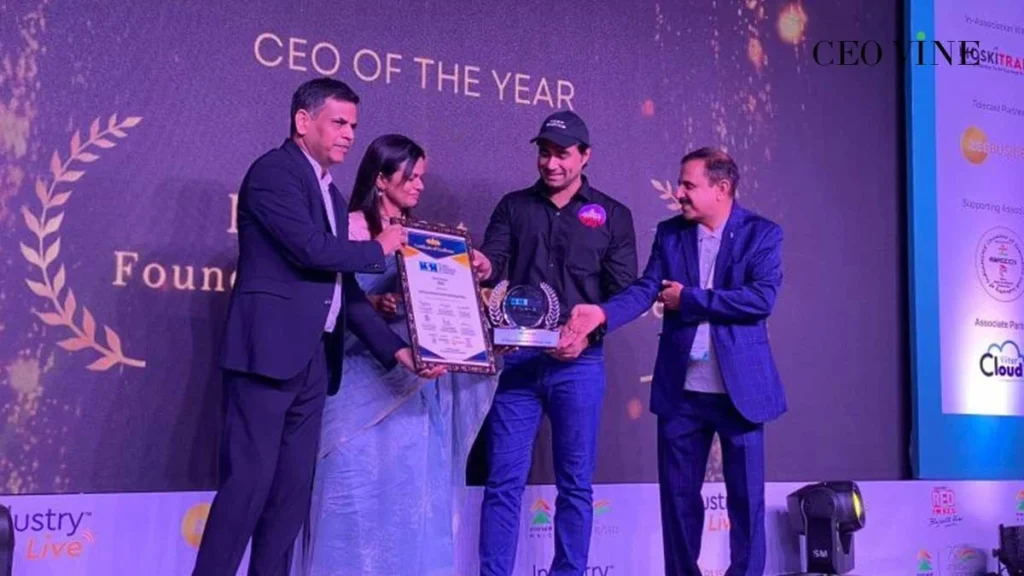
Rage Coffee crossed ₹100 crore in cumulative brand sales in December 2023, toward the end of its fourth year of full operations, a milestone Bharat Sethi announced directly on LinkedIn.
“I’m delighted to share that a new age coffee company that most wrote off before it started, and many thought as taking on a battle ‘not worth fighting,’ hit INR 100 Cr in cumulative brand sales in Dec 2023, towards the end of its 4th year of operations,” he wrote. “We achieved this figure before the beginning of our 5th year, and let me tell you, a lot of it is mad hustle, execution capabilities, support of our investors and partners who’ve backed us with tremendous belief in us, and most important, our customers and team.”
Bharat Sethi has pointed out that the milestone was reached with just five to seven SKUs, a strikingly narrow product range for a brand operating across more than 6,000 combined retail, HoReCa, and digital touchpoints. More than 3.2 million customers experienced the brand’s products across sachets, jars, and HoReCa formats, with 80% of that customer base acquired in the prior 24 months alone, indicating a sharp acceleration in adoption rather than a slow accumulation over the company’s full operating history. The Swmabhan Commerce entity reported a turnover of ₹24.95 crore for FY23-24, according to disclosures tied to the GRM Overseas transaction, a figure that reflects the parent entity’s reported financials specifically rather than the brand’s full cumulative sales narrative.
What Sets Rage Coffee Apart In A Crowded Field
Rage Coffee operates in a category that looks deceptively simple from the outside but is, in practice, one of the more difficult segments for a challenger brand to break into, given how entrenched Nestle, Tata Consumer Products, and Hindustan Unilever are across India’s instant coffee shelf. Newer competitors in the broader specialty and D2C coffee space, including Blue Tokai Coffee Roasters and Toffee Coffee Roasters, have largely competed on origin storytelling and premium positioning within the roast-and-ground segment, a different battlefield from the mass-market instant coffee category Rage built its base in.
Rage’s differentiation has rested on three deliberate choices rather than a single feature: a functional, health-positioned product angle that the legacy instant coffee giants had no organisational incentive to chase, given how well their existing formulations were already selling; an omnichannel distribution strategy built from a relatively early stage rather than retrofitted after an initial D2C-only phase, the sequencing most Indian challenger brands followed; and a willingness to bring in strategic, distribution-rich capital, such as GRM Overseas, rather than relying exclusively on venture funding rounds that come with growth expectations but no built-in path to physical retail or export infrastructure.
Future Plans
Rage Coffee’s stated ambitions extend deliberately beyond India’s borders. The company has already established distributor partnerships in the United States, Europe, and the GCC region, and the GRM Overseas partnership is explicitly designed to accelerate that international push by layering Rage’s coffee products onto GRM’s existing basmati rice export relationships in those same markets. GRM has also signalled an interest in exploring coffee shop formats under the Rage Coffee brand, a potential move from a packaged goods company into a retail and hospitality format, though this remains an exploratory direction rather than a confirmed roadmap.
Domestically, Rage has continued to widen its retail footprint methodically, expanding from roughly 2,500 retail outlets toward a stated ambition of a 5X increase within a year of that figure being reported, alongside continued category extensions beyond coffee itself, including the brand’s move into caffeine-based snacking through bars and cookies, and collaborations with food and beverage chains like Keventers and 99 Pancakes.
The Market Rage Coffee Is Betting On
The structural tailwind behind Rage Coffee’s growth is a genuinely large and still-underpenetrated category. India’s coffee market was valued at approximately $9.53 billion in 2025 and is projected to reach $17.31 billion by 2034, growing at a compound annual rate of 6.86%, according to IMARC Group, with instant coffee alone accounting for the largest single product segment at over 45% share, driven by the convenience and affordability that continues to resonate with India’s expanding urban, time-pressed consumer base.
What is shifting within that broader growth is the channel structure itself. Quick commerce platforms are increasingly becoming the preferred coffee shopping destination for younger, urban consumers, a trend that plays directly to Rage’s existing omnichannel build-out, while the broader market’s third-wave coffee culture, single-origin beans, artisanal brewing, and traceable sourcing, continues to expand the premium end of the category that Rage has, so far, mostly operated adjacent to rather than within directly.
A Founder Betting On The Category Others Wrote Off
Rage Coffee’s story is, in some respects, a study in what a second-time founder does differently the second time: enter a category everyone else assumed was closed, build distribution across every available channel simultaneously rather than sequentially, and bring in capital partners who offer infrastructure and market access, not just cash, at the moments the business needs it most.
Whether Rage Coffee can translate its current domestic momentum into a genuinely meaningful international presence, and whether its GRM Overseas partnership delivers the export leverage both companies are betting on, will likely determine whether the brand’s next ₹100 crore milestone arrives faster than its first one did. For a brand that Bharat Sethi himself has acknowledged most people wrote off before it even started, the more interesting question may no longer be whether Rage Coffee can compete with Nescafe and Bru domestically, but whether it can become the first Indian challenger brand in the category to take that fight global.
Rage Coffee is headquartered in Sector 8, IMT Manesar, Gurugram, and sells through its own platform, major e-commerce and quick commerce marketplaces, and over 6,000 combined HoReCa and retail touchpoints across India.