



Luxury EV Sales Surge 66% as India’s Affluent Shift to Electric Mobility
EVs accounted for 11% of total luxury EV sales in India in the first five months of 2025, up from 7% in the same period last year.

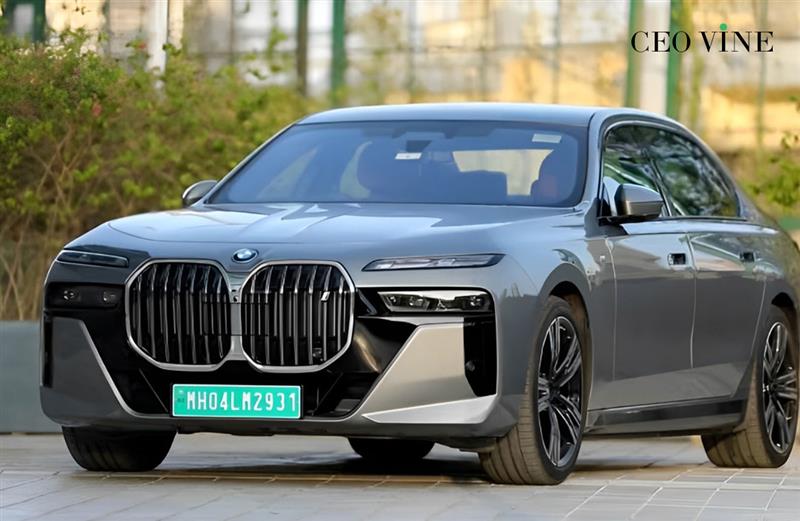
Luxury electric vehicles (EVs) are rapidly reshaping India’s premium car market, with sales jumping 66% between January and May 2025 compared to the same period last year, according to VAHAN data. This shift marks a growing preference among high-end consumers for clean mobility, driven by new model launches, improved charging infrastructure, and favorable tax policies.
EVs accounted for 11% of total luxury car sales in India in the first five months of 2025, up from 7% in the same period last year. In contrast, EVs made up just 4% of the mass-market segment.
The pre-owned luxury market has also seen a similar trend, with EVs comprising 19% of sales so far this year, a sharp rise from 5% last year, according to Luxury Cart, a leading luxury used-car platform.
Mercedes-Benz India, the market leader in the luxury segment, reported a 76% rise in EV sales year-on-year, led by models like the EQS SUV and EQE. BMW and Mini together sold 1,020 electric vehicles, marking a 110% year-on-year growth and capturing 58% of India’s luxury EV market. Audi has also expanded its presence by giving EV users access to over 6,500 charging points through its app.
“The market is shifting from ‘Why EV?’ to ‘Which EV?’,” said Santosh Iyer, MD & CEO of Mercedes-Benz India. “Customers are seeing the benefits of lower running costs, tax advantages, and better technology. EVs are sometimes priced 4–5% lower than their ICE counterparts due to GST and road tax relief.”
Himanshu Arya, CEO of Luxury Cart, said that the rising demand is also aided by declining range anxiety and the addition of new models such as the BMW iX1 and Mercedes-Benz EQA. “Almost every luxury carmaker has added EVs to their portfolio in the last year,” he noted.
Also Read | Jumbotail Becomes Unicorn After $120 Mn Series D Led by SC Ventures
The infrastructure for EVs is growing rapidly, with private players like Statiq expanding charging points across metros and highways. Jaguar Land Rover is also set to open its largest plant outside the UK in Tamil Nadu by early 2026, with an annual capacity of 30,000 units, further boosting the sector.
While the luxury EV segment offers a wide range of choices, mass-market adoption remains slower due to fewer available models. However, EVs like the Tata Harrier EV, Mahindra BE 6, and Mahindra XUV 9e are gaining popularity in the mid-premium category.
With luxury vehicle sales expected to reach 60,000 units in 2025 and further rise to 80,000–90,000 units annually by 2030, the share of electric vehicles is set to grow steadily—marking a decisive shift in India’s automotive landscape.