

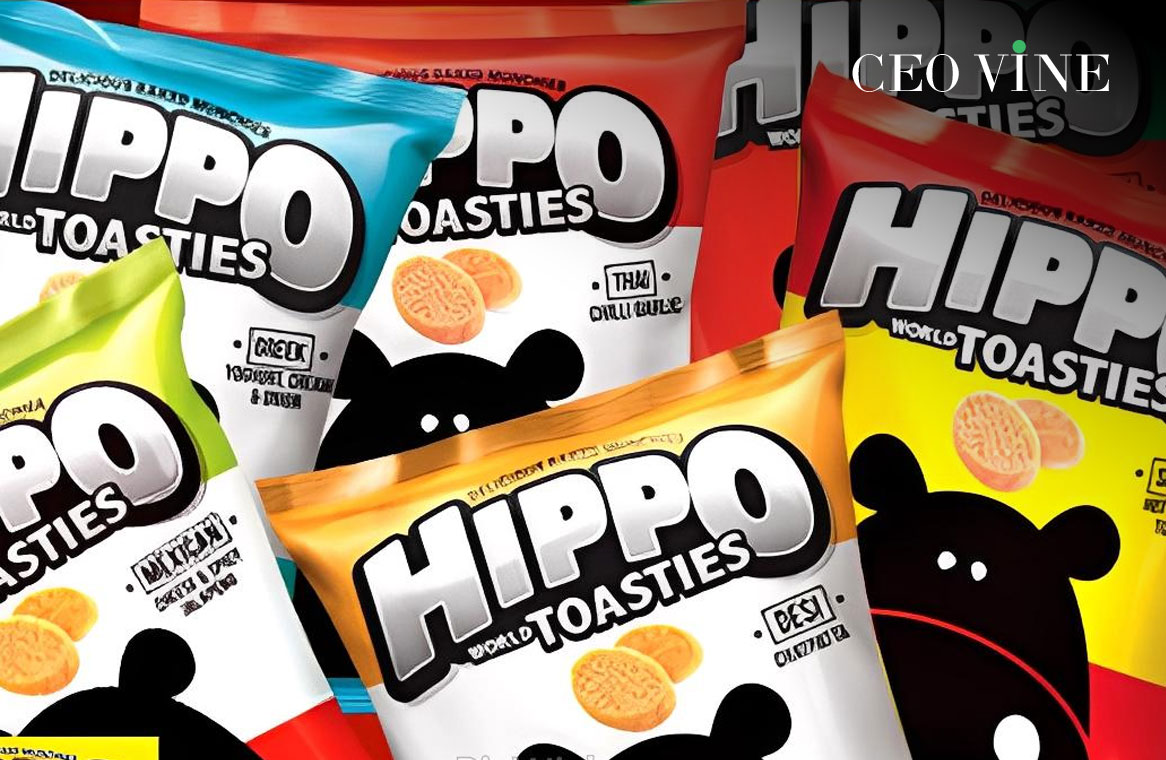
Snacking is more than just eating—it’s comfort, convenience, and nostalgia all packed into one crunchy bite. For decades, India’s snack shelves have been dominated by giants like Lays, Bingo, Balaji, and Haldiram. But in 2009, a new challenger entered the market with a bold promise and a quirky personality: Hippo Chips by Parle Agro.
Baked, not fried. Zero cholesterol. No MSG. No trans-fat. Hippo came across as a guilt-free, “better-for-you” alternative at a time when most chips were all about indulgence. Add to that oversized packs with a bright, fun-loving hippo mascot, and the product instantly stood out. Within its first year, Hippo sold over a million packets and became a household name.
But by 2014, the snack that once promised to redefine munching had quietly disappeared from the market. Fans, to this day, recall its flavors with nostalgia and even petition for its return. The story of why Hippo Chips failed is one of India’s most fascinating business case studies—an example of how even great ideas can stumble if execution falls short.
What Made Hippo Chips Unique?
Before we look at the failure, it’s important to understand what made Hippo such a hit in the first place.
- Healthier Alternative: Positioned as baked and guilt-free, it offered zero cholesterol, no MSG, no GMOs, and no trans fat.
- Quirky Packaging: The large, colorful packs with the bold hippo logo stood out on store shelves.
- Flavor Innovation: From Afghani Tikka Masala to Greek Yogurt, Thai Chilli Cream, and Indian Chatpatta, Hippo offered flavors rarely seen in the Indian market.
- Relatable Mascot: The hippo mascot was fun, goofy, and approachable, instantly connecting with younger audiences.
In short, Hippo had the product strength and the personality to become a big brand. So why did Hippo Chips fail despite such strong beginnings?
Branding Confusion: The Identity Crisis
One of the biggest reasons Hippo Chips failed was poor communication and lack of consistent branding.
Initially, Parle tried to tie Hippo with a lofty cause ending world hunger. Then it shifted to emotional advertising with the “maa ka pyaar” (mother’s love) theme, before experimenting with quirky cricket-inspired campaigns like the Indian Food League (IFL).
While each campaign was creative, the constant changes left consumers puzzled. Was Hippo a health snack? A fun indulgence? An emotional comfort food? The messaging kept shifting, and with no clear brand identity, consumers didn’t know exactly why they should choose Hippo over Lays or Bingo.
Adding to the confusion, the packaging featured a large, fat hippo while the product positioned itself as a “healthy alternative.” The visual contradicted the claim, further diluting the message.
The Supply Chain Disaster
If branding was a problem, supply chain was a crisis.
Hippo was so popular that shelves across 200,000 stores ran empty within months of launch. Consumers who couldn’t find Hippo on shelves switched to other reliable brands, and once that habit formed, it was difficult to win them back.
To address this, Parle launched the Plan-T campaign on Twitter, a pioneering crowdsourced initiative where customers reported empty shelves using hashtags. The company then relayed this data to distributors, who quickly restocked stores.
The results were impressive:
- Sales rose by 76% in the short term.
- Twitter followers grew from 800 to 4,000, a 300% jump.
- Hippo gathered real-time market intelligence directly from customers.
This campaign is still studied as a brilliant example of social media-driven problem-solving. But it couldn’t solve the bigger issue: Parle lacked the production and distribution muscle to match demand. In FMCG, availability is everything. If shelves are empty, even the best marketing can’t save you.
Intense Competition in a Crowded Market
By the time Hippo entered, India’s snack market was already saturated. Lays controlled nearly 30% of the market, followed by Bingo, Balaji, and Haldiram with strong regional dominance. These brands had deep pockets, vast distribution networks, and consistent product availability.
Hippo’s flavors and fun persona gave it novelty value, but novelty alone couldn’t sustain long-term growth. Competing against established heavyweights required either massive scale or razor-sharp differentiation, Hippo had neither.
Timing: Too Early for “Better-for-You”
Perhaps the most ironic reason why Hippo Chips failed was timing. Today, brands like Too Yumm, Tagz, and BRB thrive by offering baked, healthier snacking options. Consumers are far more health-conscious now, making Hippo’s original promise more relevant than ever.
But back in 2009, most consumers weren’t actively seeking “better-for-you” snacks. Hippo’s health USP, therefore, didn’t get the attention it deserved. The brand was simply ahead of its time.
The Indian Food League (IFL): A Missed Opportunity
In 2012, Hippo launched another creative campaign Indian Food League (IFL) during the IPL season. It tapped into cricket frenzy by pitting regional flavors against each other (like Pav Bhaji from Mumbai vs. Idli Sambhar from Chennai) and encouraged fans to vote online.
The campaign drove engagement, boosted sales during IPL, and created buzz. But again, the effort lacked continuity. After the campaign ended, Hippo didn’t build on the momentum. Instead of reinforcing its health or fun angle consistently, the brand kept experimenting with new narratives.
Why Hippo Chips Failed: The Key Lessons
Looking back, the reasons Hippo Chips failed boil down to five interconnected issues:
- Unclear Positioning – Health, emotion, fun—it tried to be everything, and ended up being nothing clear.
- Mixed Branding – A fat hippo mascot contradicted the health claim, confusing consumers.
- Severe Supply Issues – Empty shelves broke consumer trust, pushing people back to competitors.
- Intense Competition – Lays, Bingo, and Balaji had stronger recall and wider reach.
- Wrong Timing – The health-snacking trend was yet to mature in India.
Hippo Chips: A “Successful Failure”
Even though Hippo is no longer sold, its memory endures. Fans still remember its crunch, its flavors, and its quirky mascot. Online forums and social media are filled with nostalgia posts asking Parle to relaunch the brand. Some even call Hippo a “successful failure”, a product that didn’t survive commercially but carved a permanent space in consumer memory.
In many ways, Hippo paved the way for the baked-snack trend we see today. It was an experiment that proved Indian consumers were open to trying something different even if the timing, branding, and supply chain didn’t allow it to succeed.
You May Also Read | Startup Shutdowns 2025: What Went Wrong for These Businesses
Final Thoughts
The story of why Hippo Chips failed is more than just about a discontinued snack. It’s a reminder that in business, success isn’t only about having a great product.
- Clarity matters—brands must communicate their USP without confusion.
- Execution matters—great ideas die if shelves are empty.
- Timing matters—being early to a trend can be just as dangerous as being late.
Hippo Chips might not have lasted long in the market, but it lives on in memory, nostalgia, and marketing case studies. And sometimes, that’s the true sign of impact a failure that refuses to be forgotten.
FAQs
Is Hippo Chips still available?
No, Hippo Chips was discontinued around 2014. It is no longer sold in India or international markets.
Why did Hippo Chips fail?
Hippo failed due to unclear branding, supply chain shortages, intense competition, and being ahead of its time in promoting “healthy snacking.”
Will Hippo Chips ever come back?
So far, Parle Agro has not announced any plans to relaunch Hippo Chips, though fans continue to demand its return online.
What made Hippo Chips different from Lays and Bingo?
Unlike fried potato chips, Hippo was baked, with zero cholesterol, no MSG, and unique flavors like Afghani Tikka and Greek Yogurt.
Why is Hippo Chips called a “Successful Failure”?
Because despite failing commercially, it built a cult following and is still fondly remembered by consumers.
